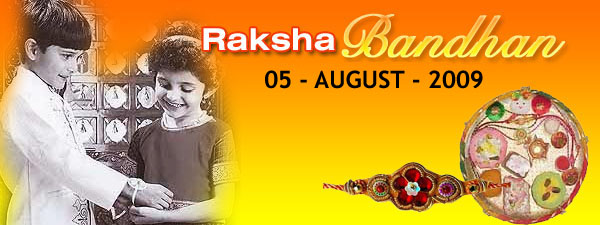
It is not the rituals, customs and traditions that change over the time but the celebration styles and perspectives that become contemporary. For centuries this festival has been celebrated in the same way. The traditions are followed with the same enthusiasm. The gaieties have only blown up to a large scale. It is the celebration of the chaste bond of love amongst the siblings
The preparations begin much in advance. Some twenty days ahead of the festival you can see colorful rakhis in the market. Girls start the shopping and preparations quite early. The shop for new clothes and buy rakhis specially the ones that have to be sent to the brothers staying far. The sweet shops, the garment shops, gift shops, all are flooded with things to attract people.
On the Raksha Bandhan day, the festivities start by the day break. Every one gets ready early and gathers for the worship of the deities. After invoking the blessings of the Gods, the sister performs brother’s arti, puts tika and chawal on his forehead and ties Rakhi amongst chanting of mantras. Then she gives him sweets and gifts. The brother accepts her offerings and vows to take care of her and be by her side in the time of need. As a token he gives the sister a return gift and sweets.
The Raksha Bandhan ceremony ends here and the celebrations begin. The family reunion itself is the reason for celebration. Tasty dishes, sweets, gifts, sing and dance and what not. Any Indian festival is incomplete without this.
For those siblings who for distances are not able to meet, it is a day for remembering the bygone time when the day was celebrated together. Emotions are expressed through e mails, e cards, rakhi greeting cards, and rakhis through internet or mail. Nothing on this day can stop the overflowing emotions.
Congregations like Rakhi Mohotsavas were started by Rabindra Nath Tagore in Shantiniketan. He started this to propagate the feeling of brotherhood amongst people. This invoked trust and feeling of peaceful coexistence. The festival for them is a symbol of harmony. The tradition continues as people tie rakhis to the neighbors and close friends. It is a festival denoting National sentiments of harmony.
Around mid-August, Hindus all over the world celebrate Rakshaa bandhan. "Raksha" means protection, and "bandhan" means bound or binding.
In North India, the occasion is popularly called Rakhi, Raksha Bandhan or Rakshaa Bandhan- the tying of an amulet.
In ancient times a woman tied a 'rakshaa' on her husband's wrist to protect him from evil. Gradually this changed; she tied a 'rakshaa' on her brother's right wrist, to protect him from evil influence and those factors which may taint his character, and to strengthen the bond of sibling love between them. On the occasion of Rakshaa Bandhan she visits her brother's home and performs his 'pujan' by applying kumkum and rice grains on his forehead. In return the brother gives her a gift and vows to protect her too. The 'rakhadi' for rakshaa bandhan itself ranges from a coloured cotton string to exquisitely decorated balls of various sizes and materials such as fluffy cotton, 'zari' paper, tinsel, beads and so on.
On Rakshaa Bandhan a second imortance relates to 'Baleva' and our devotion to the Lord. Just as Bali Raja offered devotion to Lord Narayan by sacrificing his kingdom and himself, devotees should endeavor to emulate him. That is the true spirit of Baleva.
Rakshaa bandhan day is important for the priests too, as they tie rakhis on their patrons wrist and in return receive offerings from them. In some parts of the country it is customary to draw figures on the walls of their home and worship them with offerings of vermilion and kheer. The imprints of palms are also put on either side of the entrance and rakhis are stuck on them as part of rakshaa bandhan rituals. Some parts of India also reserve Rakshaa Bandhan day importance for the sacred thread changing ceremony when the young brahmin boys discard the old one and don a new one ritualistically. However, on rakshaa bandhan it is the emotions which are important. The rakshaa bandhan ceremony performed is the symbolic everlasting bond between brothers and sisters that reinforces ties between them even across continents, and it is the one which has the most importance on this auspicious day.