|


Bees hummed in a pleasant strain and delightful breezes always blew, cool, soft and fragrant. Birds of all kids, reared by the children, sang in melodious notes and looked graceful in their flight.

Peacocks, swans, cranes and pigeons made a charming show on the tops of the houses, warbling and dancing in a variety of ways at the sight of their own shadows reflected everywhere (on the glossy surface of the roofs and balconies).

Children taught parrots and mainas to say ‘Rama’ and’Raghupati’ and ‘Saviour.’ The palace gates were magnificent in every way; the streets and squares and market-places were all elegantly laid out.
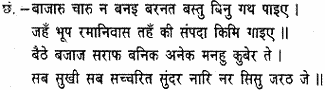
Ineffably elegant were the market-places where things could be had without price. How can anyone tell of the riches of the city where the spouse of Lakshmi himself reigned as king? Cloth-merchants, money-changers and other tradesmen sat at their stalls like so many Kuberas (gods of riches); men and women, children and aged fold – all were happy, of impeccable conduct and fair to see.

To the north (of the city) flowed the deep and limpid stream of the Sarayu, with a row of splendid bathing spots and no trace of mud upon its banks.

Some distance away was a fine spacious ghat where multitudes of horses and elephants came to drink. There were also numerous splendid ghats where women drew water and men did not bathe.

The most beautiful of all was the royal ghat, where men of all the four castes could bathe. All along the banks stood temples of the gods, surrounded by pleasant groves.
|


 to go to the Real Player site.